
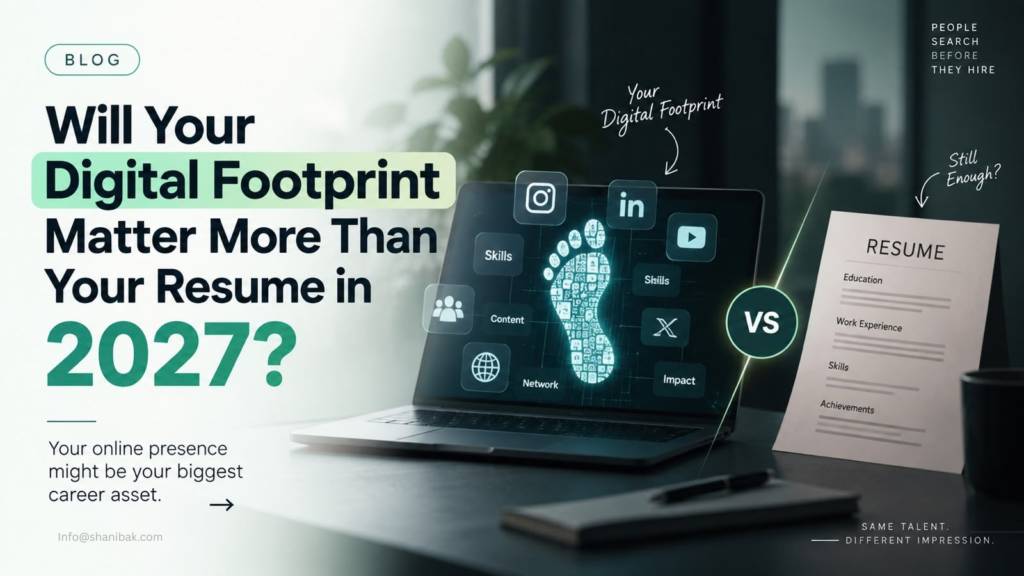
Will Your Digital Footprint Matter More Than Your Resume in 2027?
Imagine this. Two candidates apply for the same digital marketing role at a mid-sized Bangalore startup. Both have almost identical degrees, similar internship experience and resumes that look equally polished on paper. The hiring manager shortlists both, and out of habit, opens LinkedIn to check their profiles before the interview.
Candidate A has a bare profile. Just a job title and college name, nothing else.
Candidate B has a clear headline, a few posts about campaigns she worked on, a small portfolio link with two case studies, and a recommendation from a past manager.
Does this guarantee Candidate B gets the job? Not necessarily. But it does give the hiring manager something extra to talk about in the interview, something that makes her stick in memory a little longer. This is roughly the situation a lot of job seekers will find themselves in as we head toward 2027. Not every recruiter checks online profiles, and not every industry cares equally about this. But enough of them do that it’s worth understanding what a digital footprint in 2027 actually means for your career, and where it fits next to your resume rather than instead of it.
What Is a Digital Footprint?
Your digital footprint is basically the trail of information connected to you online. For working professionals, this usually includes things like your LinkedIn profile, a portfolio website if you have one, articles you’ve written, projects you’ve shared publicly, a GitHub account if you’re in tech, testimonials from clients or colleagues, and any public content you’ve created that reflects your professional life.
It’s worth clearing up one common misunderstanding here. A digital footprint is not the same as follower count. You don’t need ten thousand followers to have a strong one. A freelancer with three solid case studies and a well written LinkedIn About section often has a more useful digital footprint than someone with a large but unfocused social media presence.
Why Could Your Digital Footprint Matter More in 2027?
The simplest way to think about this is the difference between claiming a skill and showing one.
A resume line can say “Skilled in SEO and content strategy.” That’s a claim. Anyone can write it. A portfolio that shows an actual keyword research process, a content calendar you built, or a before and after comparison of a website’s traffic structure, that’s evidence. As more hiring happens for roles where output can be shown rather than just described, this distinction starts to matter more.
This is especially true for digital marketers, designers, writers, video editors and developers, where the work itself is naturally visual or shareable. It’s less true for roles like core finance, certain government positions or highly regulated industries, where formal qualifications and structured resumes still carry most of the weight. So the honest answer to the question in the title is that it depends heavily on your industry, your role and how visible your kind of work naturally is.
Resume vs Digital Footprint: What's the Difference?
They’re not competing for the same job, honestly. A resume is meant to be concise, structured and scannable. A recruiter going through fifty applications needs that structure. It tells them what you’ve done, where, and for how long, in a format they can compare quickly.
A digital footprint works differently. It’s less structured but often richer in context. It can show how you communicate, what kind of projects genuinely interest you, and how your thinking has developed over time through posts, articles or case studies. One is a summary. The other is supporting evidence. Most professionals will still need a good resume in 2027. The difference is that a strong online presence can now sit alongside it rather than being optional.
Why Personal Branding Is Becoming Important
LinkedIn personal branding gets talked about a lot, sometimes in ways that make it sound exhausting. You don’t need to post every single day. What actually helps is having a clear headline, a summary that says what you do in plain language, your real skills listed honestly, and a few posts or articles that show you understand your field.
A career changer moving from teaching into digital marketing, for instance, doesn’t need fifty posts. Three or four thoughtful ones explaining what she’s learning and how she’s applying it can do more for her professional online presence than daily generic updates ever would.
Your Portfolio Can Show What Your Resume Cannot
For anyone doing project-based work, a portfolio is often the single most useful part of a digital identity. A digital marketer, for example, could put together a simple portfolio showing an SEO audit she did for a local business, a social media campaign concept, a content calendar, and a short writeup of what she’d improve if given more time. None of this needs invented numbers or exaggerated outcomes. Honest, specific work speaks for itself far better than vague claims.
Your Digital Footprint Can Also Hurt You
This part deserves equal attention. A digital footprint isn’t automatically an asset. Old posts that haven’t aged well, copied work presented as original, exaggerated achievements or generally unprofessional public behaviour can create doubts in a recruiter’s mind just as easily as a good portfolio creates confidence.
This doesn’t mean panicking or deleting your entire online history. It means occasionally reviewing what’s publicly visible, tightening privacy settings where needed, and being thoughtful about what gets tied to your professional identity going forward.
What Students and Freshers Should Do
If you’re a student or a fresher with limited work experience, here’s where to start:
1. Set up a clean, professional LinkedIn profile with a proper headline
2. Build even a simple one-page portfolio showcasing college projects
3. Pick up practical skills and actually apply them somewhere visible
4. Share the occasional useful insight instead of generic motivational posts
5. Keep your listed skills and experience accurate, not inflated
6. Ask for genuine feedback or testimonials from professors or internship mentors
7. Do a periodic check of what shows up when someone searches your name
What Professionals Should Do Before 2027
For those already working, the checklist looks a bit different:
* Keep your LinkedIn updated alongside your resume, not months behind it
* Document real projects as you complete them, not in a rush later
* Remove outdated job details or skills you no longer use
* Review your public social media for anything that no longer fits your professional identity
* Make sure your resume and online presence tell a consistent story
* Build this gradually. It doesn’t need to happen this weekend
Final Thoughts
Your resume isn’t going away, and nothing here suggests it should. It’s still the fastest way for a recruiter to understand your qualifications at a glance. But a thoughtful digital footprint in 2027 can do something a resume alone can’t. It can show how you think, what you’ve actually built, and what kind of professional you’re becoming.
The real question isn’t whether your digital footprint will replace your resume. It’s whether the digital footprint you already have says what you want it to say about you. Worth checking, isn’t it?